刘海星访问:加强巴基斯坦与中国关系的政治与战略基础。
The three-day visit of Liu Haixing, Minister of the International Department of the Communist Party of China (CPC) Central Committee, to Pakistan from November 1 to 3, 2026, represents an important development in the longstanding Pakistan–China partnership. More than a routine diplomatic engagement, the visit reflects Beijing’s interest in strengthening political communication, institutional cooperation and strategic coordination with Islamabad at a time of significant regional and global changes.
The importance of the visit must be understood in the context of Liu’s position within China’s political system. The International Department of the CPC Central Committee (IDCPC), established in 1951, is responsible for the Party’s external relations and maintains institutional links with political parties, governments, think tanks and other organisations around the world. Liu is a member of the 20th CPC Central Committee. Before assuming his present position in September 2025, he served as Executive Deputy Director of the General Office of the CPC Central Committee’s National Security Commission. He also previously held senior diplomatic positions, including Assistant Foreign Minister and Director-General of the Ministry of Foreign Affairs’ Department of European Affairs.
His background gives him considerable experience in diplomacy, international political engagement and national security affairs. As head of the IDCPC, he serves as an important channel for communication between China’s ruling party and its international counterparts. His position provides access to senior party leadership and enables him to facilitate political dialogue and institutional cooperation. Although he does not independently determine China’s national policies, his role gives him an influential position in advancing the CPC’s international engagement and communicating its strategic priorities.
Engagement with Pakistan’s political and military leadership
During his visit, Liu held important meetings with Pakistan’s top political and military leadership. Prime Minister Shehbaz Sharif received him and reaffirmed that Pakistan–China relations constituted an ironclad, time-tested and all-weather strategic cooperative partnership. Both sides discussed regional and international developments and agreed to maintain close coordination at bilateral and multilateral forums. The Prime Minister highlighted cooperation in trade, investment, connectivity, infrastructure, information technology and agricultural modernisation.
Deputy Prime Minister and Foreign Minister Ishaq Dar also held a bilateral meeting with Liu. Their discussions focused on strengthening political engagement, cultural relations and people-to-people exchanges. Dar conveyed greetings to President Xi Jinping, while Liu brought greetings from Chinese Foreign Minister Wang Yi. Both reaffirmed their commitment to maintaining the positive momentum in bilateral relations.
An equally significant meeting took place at General Headquarters in Rawalpindi, where Chief of Defence Forces and Chief of Army Staff, Field Marshal Syed Asim Munir, received the visiting dignitary. Their discussions covered regional and international security dynamics, bilateral relations, and matters of mutual interest. Both sides reaffirmed their determination to strengthen the strategic partnership. Liu appreciated Pakistan’s contribution to regional peace and stability and expressed confidence in further advancing bilateral cooperation.
Party-to-party engagement and participation of the policy community
A particularly important feature of the visit was the symposium on Xi Jinping Thought on Party Building and the seminar on China–Pakistan governance, co-chaired by Liu Haixing and Ishaq Dar on November 2.
The event brought together representatives from Pakistan’s major political parties, including Planning Minister Professor Ahsan Iqbal, PPP Secretary General Syed Nayyer Hussain Bokhari, Senator Sherry Rehman, Senator Anusha Rahman Khan and former Senator Mushahid Hussain Syed. The Foreign Secretary, representatives of different political parties and think tanks also participated.
This gathering demonstrated that Pakistan–China relations extend beyond government-to-government and military cooperation. Engagement with political parties, researchers, think tanks and the wider policy community can create a broader understanding of each other’s development experiences and strategic priorities. It also provides an opportunity for political continuity and consensus-building in support of bilateral cooperation.
Practical outcomes and emerging opportunities
The visit reaffirmed political trust, strengthened institutional contacts and established a renewed commitment to cooperation across several important sectors. Particularly noteworthy was the discussion of closer security cooperation and the development of the next phase of the China–Pakistan Economic Corridor (CPEC). According to reporting by the South China Morning Post, Liu conveyed Beijing’s readiness to deepen security cooperation and advance CPEC 2.0. This is particularly relevant to protecting Chinese personnel, investments and infrastructure projects in Pakistan.
The visit also coincided with two important developments. On October 26, Pakistan and China launched the China–Pakistan Information Corridor (CPIC), built around four pillars: media cooperation, business and enterprises, think tanks, and culture, tourism and youth. Approximately 600 representatives from different sectors attended its launch. On October 29, the two countries signed an agreement to operationalise a Green Channel at the Sost–Khunjerab border for agricultural and allied products. These initiatives complement the political momentum generated by Liu’s visit.
In the coming months, stronger party-to-party contacts could facilitate policy dialogue, investment cooperation, agricultural exports, technology transfer, industrial development and educational exchanges. CPEC 2.0 could create new opportunities in industrial cooperation, agriculture, information technology, mining and regional connectivity. Improved security coordination would also help build confidence among Chinese investors and businesses.
A partnership with a long-term vision
Liu Haixing’s visit has reinforced the political and institutional foundations of Pakistan–China relations. Its significance lies not merely in the meetings held, but in the opportunity to translate mutual trust and strategic understanding into practical economic and developmental benefits.
The next priority should be effective implementation. Both countries should establish clear follow-up mechanisms, identify priority projects, strengthen institutional coordination and regularly review progress. Greater participation by businesses, universities, think tanks, media organisations and young professionals would further broaden the partnership.
Pakistan and China have built a relationship based on mutual trust, respect and shared strategic interests over decades. By strengthening political engagement and converting diplomatic goodwill into tangible outcomes, Liu Haixing’s visit can contribute to a more dynamic, productive and forward-looking Pakistan–China partnership.
刘海星访问:加强巴基斯坦与中国关系的政治与战略基础。
2026年11月1日至3日,中国共产党中央委员会国际部部长刘海生对巴基斯坦进行为期三天的访问,标志着中巴长期合作伙伴关系的重要进展。此次访问超越了常规外交互动,体现了北京在区域和全球形势发生重大变化背景下,加强与伊斯兰堡在政治沟通、机构合作和战略协调方面的意愿。
必须将此次访问的重要性置于刘在中共中央政治体制中的位置来理解。中国共产党中央委员会国际部(IDCPC)成立于1951年,负责党的对外事务,并与世界各国政党、政府、智库及其他组织保持机构联系。刘海生是中共二十大代表,此前于2025年9月就任现职前,曾担任中共中央国家安全委员会办公厅执行副主任。他此前还曾担任高级外交职务,包括外交部欧洲事务司司长、副部长等。
他的背景使他在外交、国际政治交往以及国家安全事务方面积累了丰富经验。作为中国共产党对外联络部(IDCPC)负责人,他成为中国共产党与国际同行之间沟通的重要桥梁。这一职位使他能够接触到高层党政领导人,推动政治对话和机构合作。尽管他不能独立决定中国的国家政策,但其角色使其在推进中国共产党的国际参与以及传达其战略重点方面具有重要影响力。
与巴基斯坦政军领导层的接触
访问期间,刘与巴基斯坦最高政界和军方领导人举行了重要会晤。巴基斯坦总理谢赫扎伊·沙里夫接见了他,并重申中巴关系是坚不可摧、经久不衰且全天候的战略合作伙伴关系。双方讨论了地区和国际形势,并同意在双边和多边论坛上保持密切协调。总理强调了在贸易、投资、互联互通、基础设施、信息技术以及农业现代化方面的合作。副总理兼外交部长伊沙克·达尔也与刘举行了双边会晤,双方重点讨论了加强政治互动、文化交流以及民间往来。双方均重申了维护双边关系积极势头的承诺。
在拉瓦尔品第总参谋部举行的一场同样重要的会议中,巴基斯坦国防军司令兼陆军参谋长赛义德·阿西姆·穆尼尔元帅会见了来访的外交官员。双方讨论了地区和国际安全形势、双边关系以及共同关心的问题。双方再次强调了加强战略伙伴关系的决心。刘对巴基斯坦为地区和平与稳定所作的贡献表示赞赏,并表达了进一步深化双边合作的信心。
政党间互动及政策界参与
此次会议汇聚了巴基斯坦主要政党的代表,包括计划部长阿赫桑·伊克巴尔教授、巴基斯坦人民党秘书长赛义德·纳耶尔·侯赛因·博卡里、参议员谢里·雷曼、参议员阿努沙·拉赫曼·汗以及前参议员穆沙希德·侯赛因·赛义德。外交部长、各政党及智库代表也出席了会议。
此次会晤表明,巴基斯坦与中国的关系已超越政府间和军事合作的范畴。与各政党、研究人员、智库以及更广泛政策界人士开展互动,有助于增进彼此对发展经验与战略优先事项的理解。同时,也为推动双边合作提供了延续政治立场和达成共识的机会。
实际成果与新兴机遇
此次访问重申了政治互信,加强了机构间联系,并重新确立了在多个重要领域开展合作的承诺。其中尤为引人注目的是双方就深化安全合作以及推进“一带一路”中巴经济走廊(CPEC)下一阶段发展进行了讨论。据《南华早报》报道,刘表示北京愿进一步深化安全合作,推动CPEC 2.0建设,这尤其有助于保护中国在巴基斯坦的人员、投资及基础设施项目。
此次访问也恰逢两项重要进展。10月26日,中巴两国启动了中巴信息走廊(CPIC),该走廊以媒体合作、工商企业、智库以及文化、旅游和青年等四大支柱为基础,约有600名来自不同领域的代表出席了启动仪式。10月29日,两国签署协议,将在索斯特—昆杰拉布边境设立农业及相关产品绿色通道。这些举措进一步补充了刘访期间所营造的政治势头。
未来几个月,加强政党间联系将有助于推动政策对话、投资合作、农产品出口、技术转让、产业发展和教育交流。“一带一路”2.0有望在产业合作、农业、信息技术、矿业及区域互联互通方面创造新的机遇。加强安全协调也将有助于增强中国投资者和企业之间的信心。
具有长远愿景的合作
刘海生的访问巩固了中巴关系的政治与制度基础。其意义不仅在于所举行的会晤,更在于将双方互信与战略共识转化为切实的经济与发展成果的机会。
下一步应优先推进有效实施。两国应建立明确的后续机制,确定重点项目,加强机构协调,并定期评估进展。企业、高校、智库、媒体组织以及青年专业人士的更大参与,将进一步拓展这一合作关系。
巴基斯坦与中国数十年来一直基于相互信任、尊重和共同战略利益发展关系。通过加强政治交流,将外交善意转化为切实成果,刘海生的访问有助于推动巴基斯坦与中国的伙伴关系变得更加富有活力、富有成效且具有前瞻性。
Reference Link:- https://macaulawnews.com/newsinfo/3228996.html
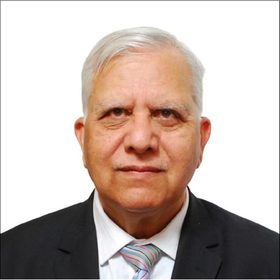
Zamir Ahmed Awan is the founder and Chair of the Global Silk Route Research Alliance, a think tank in Islamabad. He studied engineering at Shanghai University in the 1980s, and years later he went back to China as Pakistan's science counsellor in Beijing, from 2010 until 2016, working on science and higher education cooperation between the two countries.…