巴基斯坦的创新潜力:释放青年人才,建设知识型经济

(下边有中文翻译,请继续看到底。 谢谢。)
Pakistan’s improvement in the Global Innovation Index (GII) 2026 is an encouraging development and a reminder of the country’s largely untapped intellectual potential. According to the World Intellectual Property Organization (WIPO), Pakistan has advanced four positions, from 99th in 2025 to 95th among 139 economies in 2026. More importantly, it has regained its innovation-overperformer status for the fourth time, demonstrating that the country can generate innovation results beyond what might be expected at its current level of economic development.
This achievement deserves recognition, but it should also encourage serious reflection. Pakistan is a country of extraordinary human talent, intellectual ability, creativity and entrepreneurial energy. Its young population represents a considerable national asset. The challenge is not a shortage of capable people; it is the absence of a sufficiently supportive environment in which their abilities can be developed, rewarded and transformed into productive economic activity.
The opportunity is enormous. With appropriate policies, institutional reforms and sustained investment in human capital, Pakistan can substantially improve its innovation performance and strengthen its position in the global knowledge economy.
Understanding Pakistan’s Innovation Performance
The WIPO report offers important insights into Pakistan’s innovation landscape. The country ranks 121st in innovation inputs but 72nd in innovation outputs. This difference is particularly significant because it indicates that Pakistan is producing relatively strong results despite limited resources and enabling conditions.
Pakistan’s strengths are concentrated in the digital economy. It ranks 10th globally in mobile application creation, 15th in ICT services exports, 19th in high-technology imports and 33rd in software spending. Its scientific production ranks 49th and university quality 47th. These achievements demonstrate the country’s capacity to contribute to scientific research, technological services and digital innovation.
However, the weaknesses are equally important. Pakistan does not feature among the leading economies in any major innovation pillar, including human capital and research, infrastructure and institutional development. This suggests that individual successes have not yet developed into a sufficiently integrated national innovation ecosystem.
The experience of China is particularly relevant. Ranked 10th globally, China has demonstrated how sustained investment in education, scientific research, industrial modernization, technological infrastructure and university–industry cooperation can transform innovation into economic productivity. Pakistan can learn from this experience while developing policies suited to its own circumstances.
Pakistan’s Greatest Asset: Its Young and Talented Population
Pakistan’s most valuable resource is its people. Approximately 67 per cent of its population is below 30 years of age, representing an enormous opportunity for national development. The country has millions of young people studying engineering, medicine, computer science, artificial intelligence, business, agriculture and other disciplines.
Pakistani professionals and researchers have demonstrated their capabilities internationally. Pakistani scientists, engineers, doctors, entrepreneurs and IT specialists are contributing to leading institutions and industries worldwide. The country’s growing software industry, expanding freelance community and scientific publications further demonstrate this potential.
According to the International Labour Organization, Pakistan has approximately 46.3 million people aged 15–24. Yet 28.4 per cent of young people are outside employment, education or training. This is a serious challenge that demands urgent attention.
Talent without opportunity can become frustration. Education without employment prospects can encourage migration. Scientific knowledge without research facilities and investment cannot generate its full economic value.
Pakistan must therefore move beyond simply producing graduates. It must develop innovators, researchers, entrepreneurs, skilled technicians and technology leaders.
A National Policy to Unlock Youth Potential
Pakistan needs a comprehensive, long-term National Innovation and Youth Talent Development Strategy, supported by federal and provincial governments, universities, research institutions and the private sector.
1. Reform education around innovation and practical skills
The education system should prioritize critical thinking, problem-solving, scientific inquiry, creativity and practical learning rather than excessive dependence on memorization. Artificial intelligence, robotics, programming, biotechnology, advanced manufacturing, renewable energy and data science should receive greater attention.
Universities must regularly update curricula in consultation with industry. Technical and vocational education should be expanded, particularly for young people who cannot pursue conventional university education.
Digital education and affordable internet access should also reach rural communities and underserved regions.
2. Establish a National Youth Innovation Fund
A dedicated fund should support talented young innovators, university researchers, and technology entrepreneurs. Competitive grants, seed capital, research scholarships, and startup financing should be provided through transparent evaluation.
Young people with promising ideas should not be prevented from establishing businesses because they lack financial resources or influential connections.
Special attention should be given to agricultural technology, artificial intelligence, medical technology, clean energy, water management, advanced materials, and locally developed industrial technologies.
3. Strengthen university–industry cooperation
Universities should become engines of innovation and economic development. Research should address real industrial, agricultural, environmental and social challenges.
Technology parks, business incubators, university spin-offs and joint research laboratories should be established through partnerships between universities and private companies.
Pakistan should also strengthen intellectual property protection and simplify the commercialization of research discoveries. Researchers must have opportunities to transform scientific ideas into marketable products, businesses, and employment.
4. Create attractive opportunities for talented professionals
Brain drain is among Pakistan’s most serious long-term challenges. Many talented young professionals seek opportunities abroad because of better salaries, research facilities, professional recognition, institutional stability, and career progression.
The solution is not to discourage international mobility. It is to make Pakistan sufficiently attractive for talented people to build successful careers at home.
Competitive research grants, merit-based recruitment, transparent promotion systems, professional autonomy, and modern laboratories are essential. The government should encourage private-sector investment in research and development and provide incentives to companies that employ highly skilled Pakistani professionals.
A national program could also offer returning scientists and professionals attractive research positions, relocation assistance and opportunities to establish laboratories, businesses and technology ventures.
5. Mobilize the Pakistani diaspora
Millions of Pakistanis living abroad represent an important reservoir of knowledge, experience, investment and international connections.
Instead of viewing migration exclusively as a loss, Pakistan should develop a structured brain-circulation program. Pakistani experts abroad could be invited to undertake visiting professorships, joint research projects, startup mentoring, online teaching and industrial consultancy.
Flexible arrangements would allow professionals to contribute to Pakistan without necessarily abandoning their international careers.
6. Give women equal opportunities in innovation
Pakistan cannot fully utilize its intellectual resources while a significant proportion of its female talent remains underrepresented in education, research and employment.
Scholarships, safe educational environments, flexible working arrangements, digital employment opportunities and greater representation in scientific leadership should become national priorities.
Women entrepreneurs and researchers should receive equal access to financing, training and professional networks.
7. Ensure policy continuity and institutional coordination
Innovation requires long-term commitment. Frequent policy changes, bureaucratic obstacles and uncertainty discourage investment and undermine research programs.
Pakistan should establish a coordinated national innovation framework with measurable targets, independent monitoring and regular public reporting. Federal and provincial institutions must work together, while the private sector should have a meaningful role in policy formulation and implementation.
From Talent to National Competitiveness
Pakistan’s digital economy demonstrates what can be achieved when talent meets international opportunities. According to the State Bank of Pakistan and the Pakistan Economic Survey 2025–26, IT and telecom export remittances reached approximately $4.6 billion in FY2025–26. This achievement illustrates the contribution of Pakistani software developers, IT professionals, freelancers and technology companies to foreign exchange earnings.
However, Pakistan must move beyond low-cost outsourcing and develop higher-value capabilities in artificial intelligence, cybersecurity, enterprise software, semiconductor design, financial technology and advanced engineering.
The country should also strengthen cooperation with technologically advanced economies, particularly China. Joint research centers, industrial training, technology transfer, AI education and collaborative startups could create opportunities for Pakistani youth while supporting local industrial development.
CPEC provides an additional platform for cooperation in technology, manufacturing, agriculture, renewable energy and digital infrastructure. Its next phase should place greater emphasis on knowledge transfer, local innovation and skilled employment.
The Road Ahead
Pakistan’s improvement to 95th position in the Global Innovation Index is a positive development, but the ultimate objective should not simply be achieving a better numerical ranking. It should be building a productive, innovative, and technologically capable society.
The country has talented young people, capable scientists, internationally competitive professionals, growing digital industries and significant entrepreneurial potential. What it needs is an environment that rewards merit, encourages creativity, supports research, facilitates investment and provides equal opportunities.
Switzerland, South Korea, Singapore and China demonstrate that sustained investment in knowledge, research and technological capabilities can strengthen national competitiveness. Pakistan must develop its own pathway, drawing lessons from successful experiences while recognizing its unique strengths and challenges.
Pakistan’s greatest untapped resource is the intelligence, creativity and determination of its people. Its youth should not have to leave the country to realize their potential. They should find opportunities at home to innovate, prosper and contribute to national progress.
With visionary planning, consistent policies and a conducive environment, Pakistan can transform its demographic advantage into an innovation dividend. The improvement in the 2026 Global Innovation Index is encouraging; the real ambition should be to make Pakistan a recognized center of scientific excellence, technological innovation, and entrepreneurial achievement.
巴基斯坦的创新潜力:释放青年人才,建设知识型经济.
巴基斯坦在2026年全球创新指数(GII)中的提升是一个令人鼓舞的进展,也提醒着我们该国尚未充分挖掘的智力潜能。根据世界知识产权组织(WIPO)的数据,巴基斯坦从2025年的第99位上升至2026年139个经济体中的第95位,提升了四个名次。更重要的是,巴基斯坦已第四次重新获得“创新领先”地位,表明该国在当前经济发展水平下,仍能产生超出预期的创新成果。
这一成就值得肯定,但也应引发深入思考。巴基斯坦拥有非凡的人才、卓越的智力能力、创造力以及创业活力。其年轻人口构成了宝贵的国家资源。挑战并不在于人才匮乏,而在于缺乏一个足够支持性的环境,使这些人才得以发展、获得回报,并转化为富有生产力的经济活动。
机遇巨大。通过制定适当的政策、推进制度性改革并持续投入人力资本,巴基斯坦可以显著提升其创新能力,并巩固其在全球知识经济中的地位。
了解巴基斯坦的创新表现
世界知识产权组织(WIPO)的报告为巴基斯坦的创新现状提供了重要见解。该国在创新投入方面排名第121位,但在创新产出方面排名第72位。这一差距尤为突出,表明尽管资源有限且发展条件尚不完善,巴基斯坦仍取得了相对较强的成绩。
巴基斯坦的优势主要集中在数字经济领域:在全球移动应用开发方面排名第十,信息通信技术(ICT)服务出口位列第十五,高新技术进口排名第九,软件支出位居第三十三位。其科研产出排名第四十九,大学教育质量排名第四十七。这些成就充分体现了该国在科学研究、技术服务和数字创新方面的潜力。
然而,其薄弱环节同样不容忽视。巴基斯坦在人力资本、科研、基础设施和制度发展等主要创新领域均未跻身全球领先经济体之列。这表明,单个领域的成功尚未演变为一个足够成熟的国家创新生态系统。
中国的经验尤为具有参考意义。中国在全球排名第十,其持续投入教育、科学研究、工业现代化、科技基础设施以及产学研合作,已成功将创新转化为经济生产力。巴基斯坦可以在借鉴这一经验的同时,制定符合自身国情的政策。
巴基斯坦最大的优势:年轻而富有才华的人口
巴基斯坦最宝贵的资源是其人民。约67%的人口年龄在30岁以下,为国家发展提供了巨大机遇。该国拥有数以百万计的年轻人,正在攻读工程学、医学、计算机科学、人工智能、商业、农业及其他学科。
巴基斯坦的专业人士和研究人员已在国际上展现出卓越的能力。巴基斯坦的科学家、工程师、医生、企业家和信息技术专家正为全球领先的机构和产业贡献。该国不断发展的软件产业、日益壮大的自由职业群体以及科学出版物,进一步彰显了这一潜力。
根据国际劳工组织的数据,巴基斯坦约有4630万年龄在15至24岁之间的年轻人。然而,28.4%的年轻人处于非就业、非教育或非培训状态,这是一个亟需关注的重大挑战。
缺乏机会的人才容易产生挫败感,没有就业前景的教育可能促使人们外迁,而没有研究设施和投资的科学技术也无法充分发挥其经济价值。
因此,巴基斯坦必须超越仅仅培养毕业生的层面,应致力于发展创新者、研究人员、企业家、技术人才和科技领袖。
释放青年潜力的国家政策
巴基斯坦需要一项全面且长期的国家创新与青年人才培养战略,得到联邦政府、各省级政府、大学、科研机构及私营部门的支持。
- 改革教育,注重创新与实践技能
教育体系应优先培养批判性思维、解决问题能力、科学探究精神、创造力和实践学习能力,而非过度依赖死记硬背。人工智能、机器人技术、编程、生物技术、先进制造、可再生能源和数据科学等领域应得到更多关注。
大学必须定期与行业协商更新课程设置。应扩大技术教育和职业教育,特别是为无法接受传统大学教育的年轻人提供支持。
数字教育和可负担的互联网接入也应覆盖农村社区和偏远地区。
- 设立国家青年创新基金
应设立专项基金,支持有才华的青年创新者、高校研究人员和技术创业者。通过透明的评审机制,提供竞争性资助、种子资本、研究奖学金和初创企业融资。
不应因缺乏资金或影响力人脉而阻碍有潜力的年轻人创办企业。
应重点关注农业科技、人工智能、医疗技术、清洁能源、水资源管理、先进材料以及本地发展工业技术等领域。
- 加强校企合作
大学应成为创新和经济发展的重要引擎。科研应聚焦于真实的工业、农业、环境和社会挑战。
通过大学与私营企业之间的合作,应建立科技园区、企业孵化器、大学衍生企业以及联合研究实验室。
巴基斯坦还应加强知识产权保护,并简化科研成果的商业化流程。研究人员必须有机会将科学创意转化为可市场化的产品、企业和就业岗位。
- 为有才华的专业人士创造更具吸引力的发展机会
人才外流是巴基斯坦最严峻的长期挑战之一。许多有才华的年轻专业人士因更高的薪资、更好的研究设施、职业认可、机构稳定性以及职业晋升机会,而选择前往海外发展。
解决之道并非抑制国际流动,而是让巴基斯坦对有才华的人才更具吸引力,使其能够在本国建立成功的职业生涯。
提供具有竞争力的研究资助、基于绩效的招聘制度、透明的晋升机制、专业自主权以及现代化实验室至关重要。政府应鼓励私营部门投资研发,并为聘用高技能巴基斯坦专业人士的企业提供激励措施。
此外,国家层面可推出一项计划,为归国的科学家和专业人士提供有吸引力的研究岗位、搬迁援助,以及建立实验室、企业和技术创业项目的机遇。
- 动员巴基斯坦侨民
生活在海外的数百万巴基斯坦人是知识、经验、投资和国际联系的重要资源。
巴基斯坦不应将移民问题仅仅视为损失,而应制定一套系统的脑力回流计划。可邀请海外的巴基斯坦专家担任访问教授、参与联合研究项目、提供创业指导、进行在线教学以及提供工业咨询。
灵活的安排能让专业人士在不放弃其国际职业生涯的前提下为巴基斯坦作出贡献。
- 为女性提供平等的创新机会
巴基斯坦在智力资源方面无法得到充分开发,同时大量女性人才在教育、科研和就业领域仍处于代表性不足的状态。
奖学金、安全的学习环境、灵活的工作安排、数字化就业机会以及在科学领导层中的更大代表权,应成为国家优先事项。
女性创业者和研究人员应享有平等的融资、培训和专业网络准入。
- 确保政策连续性与机构协调
创新需要长期承诺。频繁的政策变动、官僚障碍和不确定性会抑制投资,削弱科研项目。
巴基斯坦应建立一个协调一致的国家创新框架,设定可衡量的目标,实施独立监测,并定期向公众报告进展。联邦与省级机构必须协同合作,同时私营部门应在政策制定和实施中发挥实质性作用。
从人才到国家竞争力
巴基斯坦的数字经济展示了当人才与国际机遇相遇时所能取得的成就。根据巴基斯坦国家银行和2025–26年度巴基斯坦经济调查报告,2025–26财年IT和电信出口汇款达到约46亿美元。这一成果凸显了巴基斯坦软件开发人员、IT专业人士、自由职业者和技术企业对外汇收入的贡献。
然而,巴基斯坦必须超越低成本外包,发展人工智能、网络安全、企业软件、半导体设计、金融科技和先进工程等高附加值能力。
该国还应加强与技术先进的经济体合作,特别是与中国。联合研究中心、产业培训、技术转让、人工智能教育以及协作型初创企业,不仅可为巴基斯坦青年创造机遇,还能支持本地产业发展。
“一带一路”倡议为科技、制造、农业、可再生能源和数字基础设施领域的合作提供了额外平台。下一阶段应更加注重知识转移、本地创新和高技能就业。
展望未来
巴基斯坦在全球创新指数中提升至第95位,是一项积极的发展,但最终目标不应仅仅停留在更高的排名上。而应致力于建设一个富有生产力、具备创新能力且技术能力先进的社会。
巴基斯坦拥有才华横溢的青年、有能力的科学家、具有国际竞争力的专业人才、不断发展的数字产业以及巨大的创业潜力。国家需要的是一个能够奖励才能、鼓励创造力、支持科研、促进投资并提供平等机会的环境。
瑞士、韩国、新加坡和中国表明,持续投入知识、研究和技术能力,能够增强国家竞争力。巴基斯坦必须走出属于自己的发展道路,在借鉴成功经验的同时,充分认识自身独特的优势与挑战。
巴基斯坦最宝贵的未开发资源,是人民的智慧、创造力和决心。年轻人不应为实现自身潜力而离开国家,他们应在本土寻找创新、发展和促进国家进步的机会。
通过远见卓识的规划、持续稳定的政策以及有利的环境,巴基斯坦可以将人口优势转化为创新红利。2026年全球创新指数的提升令人鼓舞;真正的目标应是使巴基斯坦成为公认的科学卓越、技术创新和创业成就中心。
(注意: 本文是用AI翻译的,或有误差。请以原版英文为准。谢谢。)
Reference Link:- https://theopiniondesk.com/pakistans-innovation-potential/
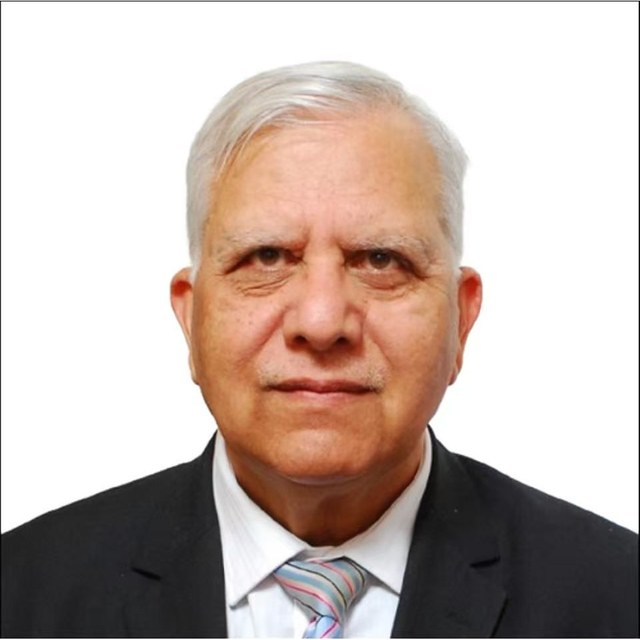
Zamir Ahmed Awan is the founder and Chair of the Global Silk Route Research Alliance, a think tank in Islamabad. He studied engineering at Shanghai University in the 1980s, and years later he went back to China as Pakistan's science counsellor in Beijing, from 2010 until 2016, working on science and higher education cooperation between the two countries.…